Redesigned Black Panther Web3 Project
From a meme coin with a platform to a complete Web3 ecosystem
TIMELINE
Dec 2024 — August 2025
PLATFORM
Web App
MY ROLE
Lead product designer
Introduction
The original Black Panther platform began as a way to buy a meme coin inspired by the hype of the Black Panther movie, its story, themes, and the inspiration it carried. Its main audience was those drawn to that theme. But meme coins only last as long as the hype or the community behind them stays relevant.
In this case, even the coin's founders were not the main drivers of the Black Panther theme, so its relevance and momentum were outside their control. This left the project unstable.
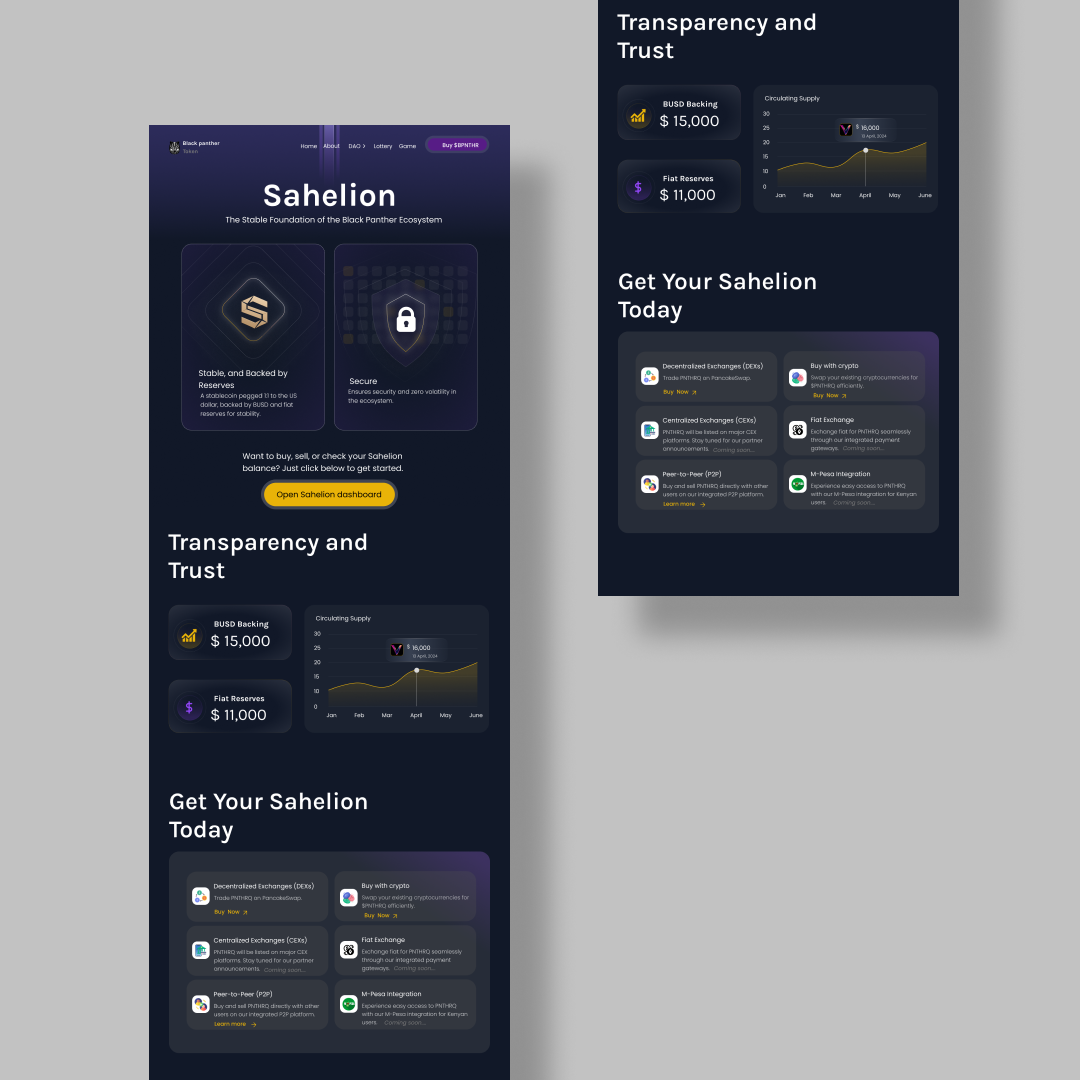
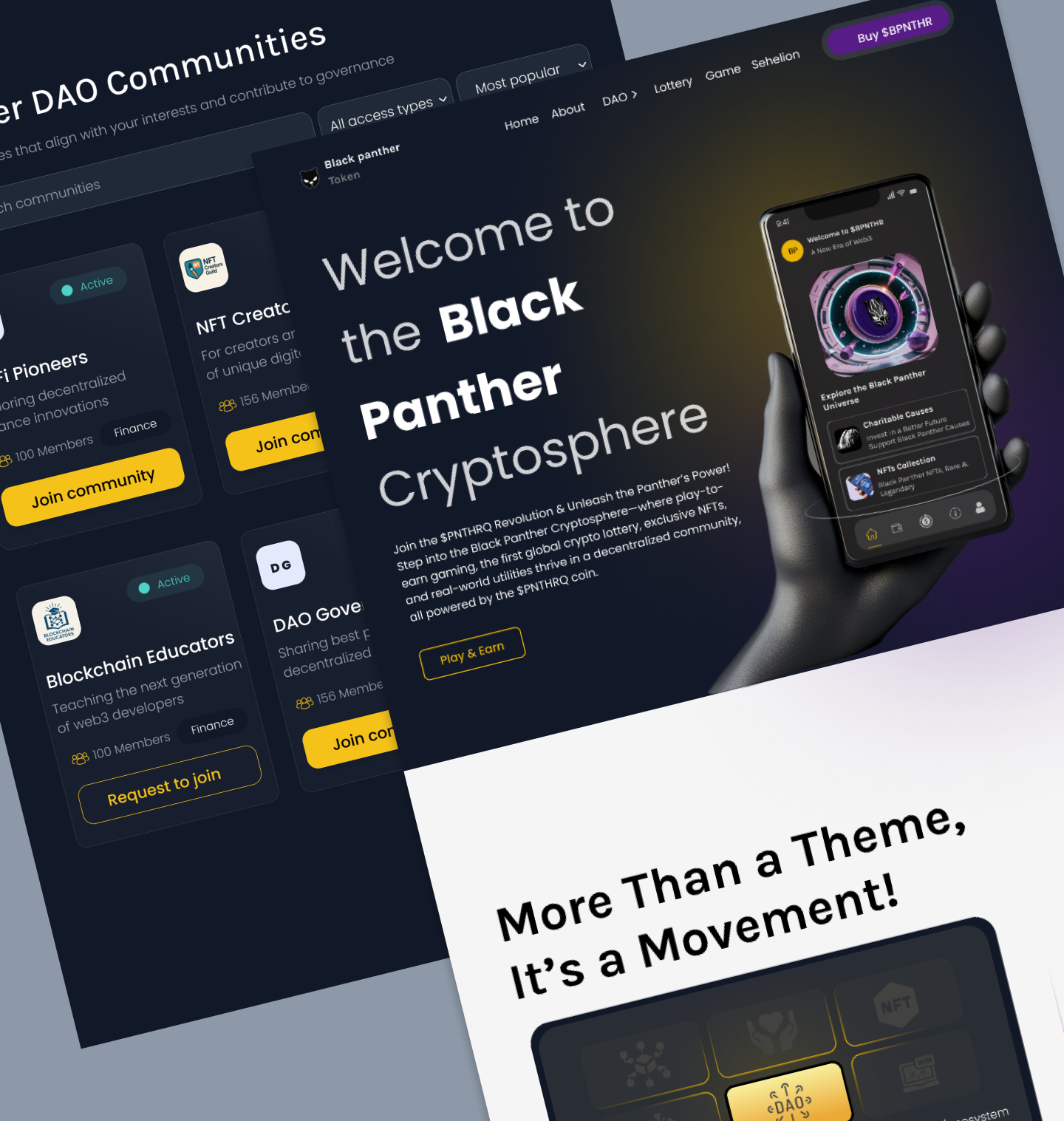
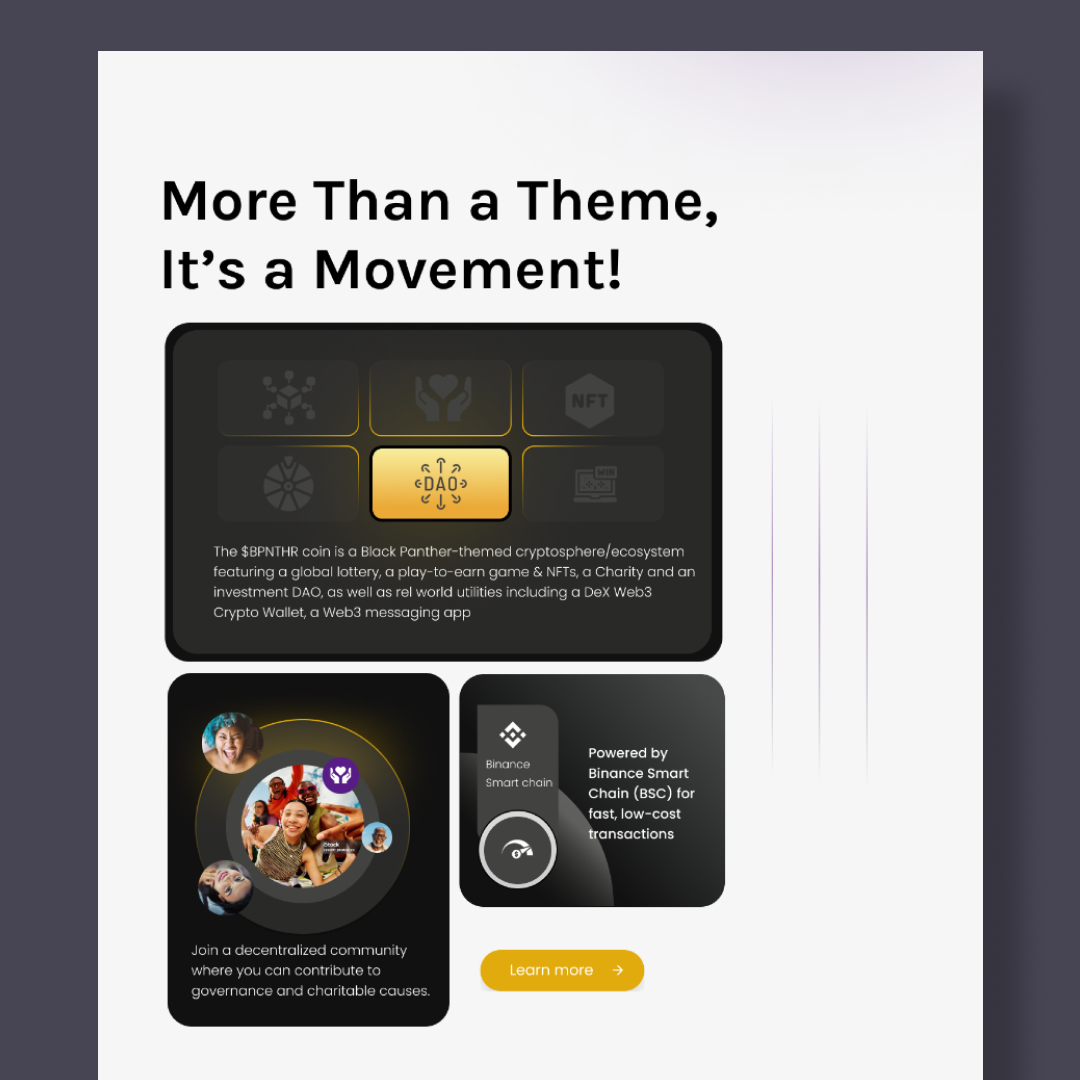
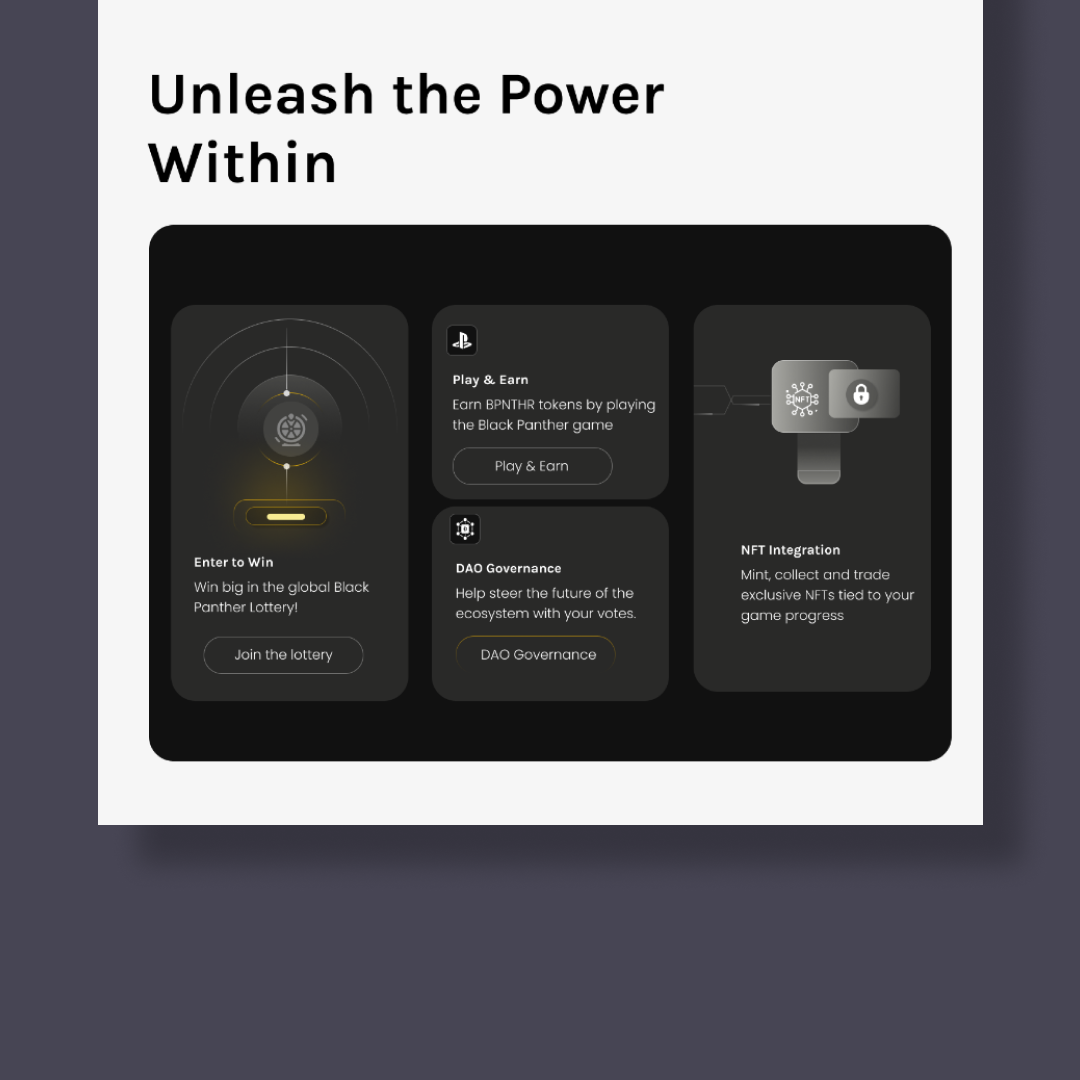
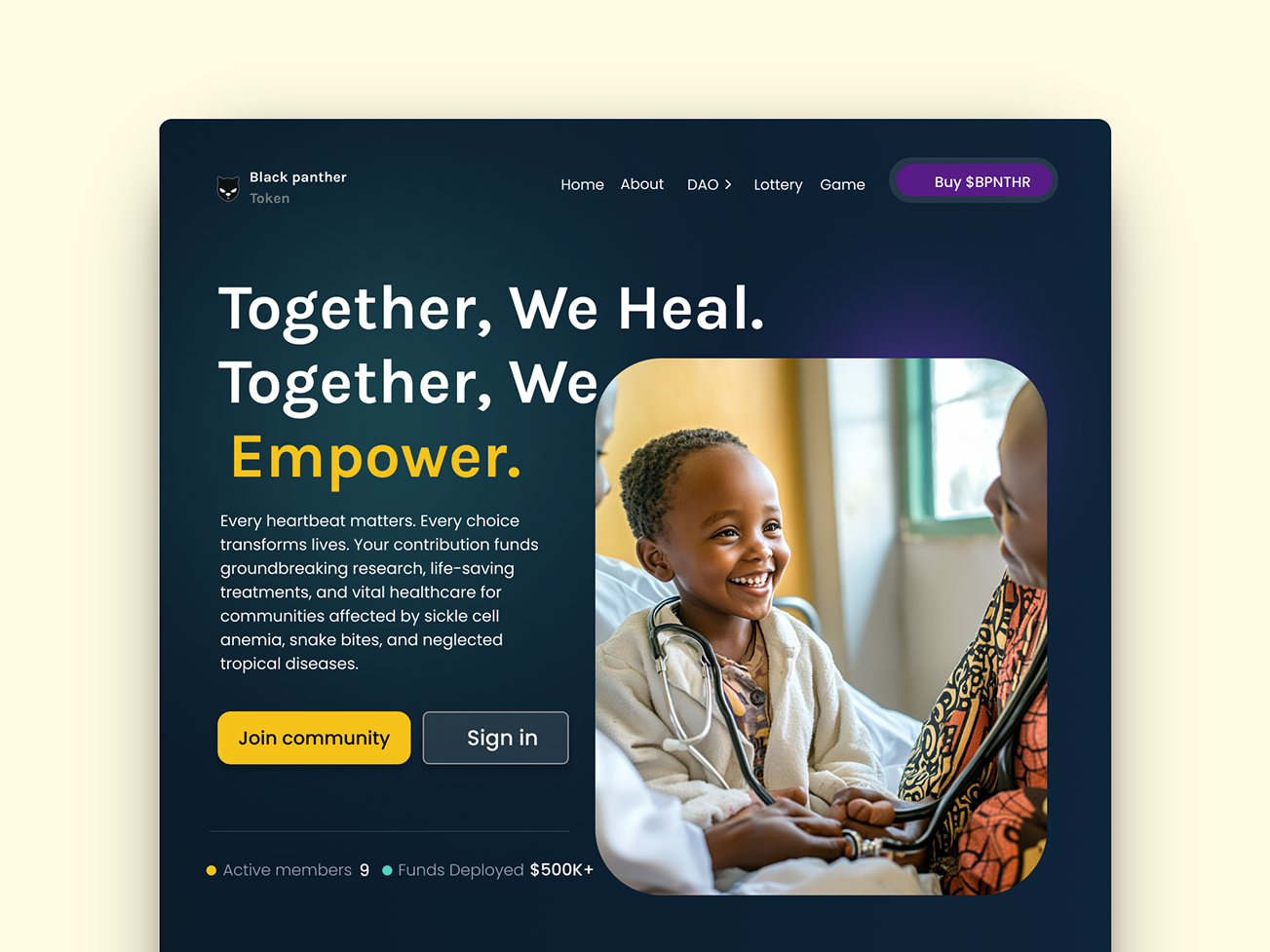
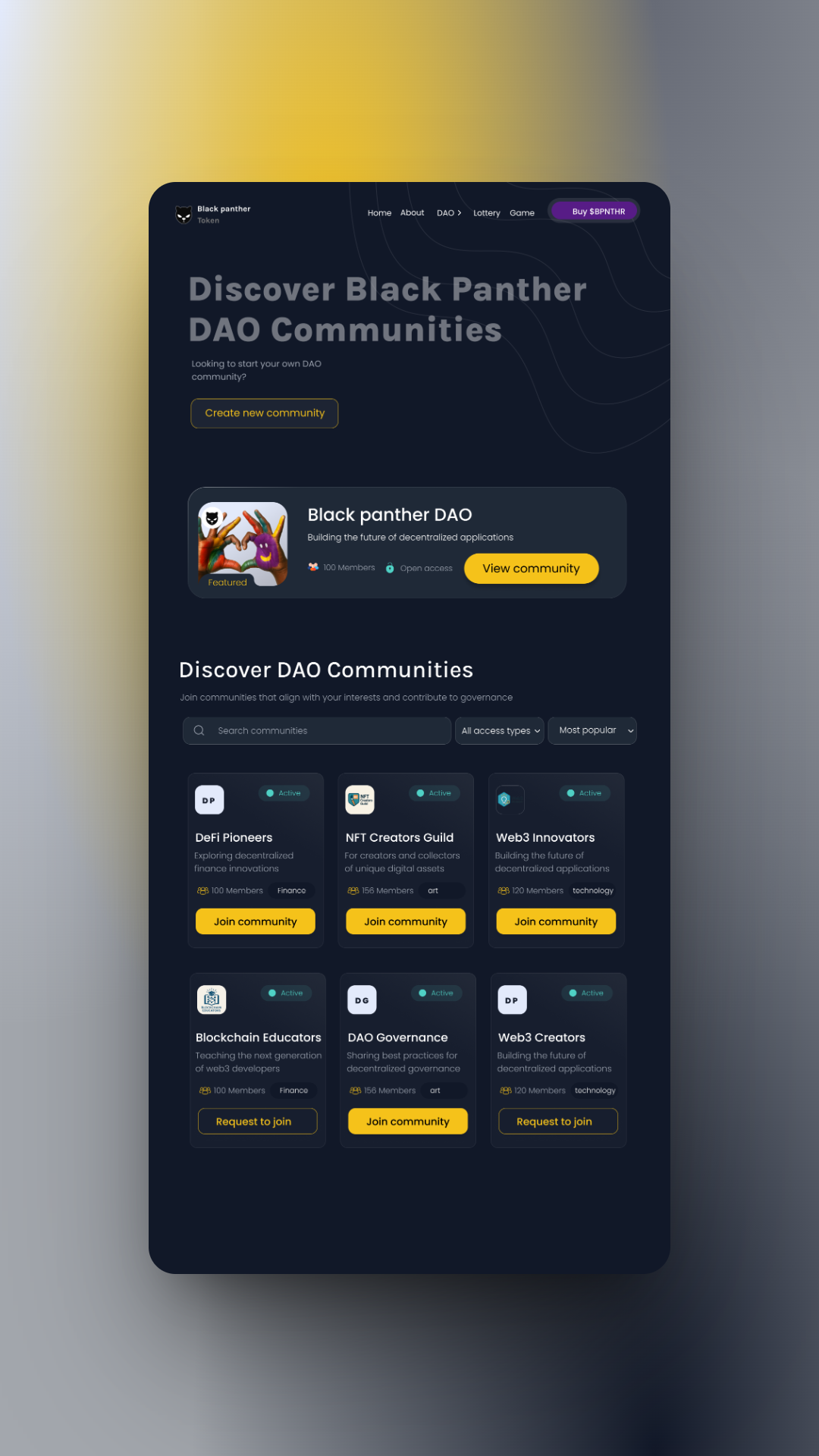
In this redesign, we transformed the product into something independent, built to last beyond hype. While retaining many of its original features, we evolved it from a meme coin into a full Web3 ecosystem: with a Black Panther token (no longer just a meme coin), a stablecoin, and practical utilities such as gaming, lotteries, and DAOs, giving both the token and stablecoin real, lasting purpose.
My Role
I was the Lead Product Designer, responsible for overseeing the entire platform experience. I collaborated closely with Danish to shape the overall user journey, worked with Salome on design execution, and coordinated with Jicks, our Project Manager, to keep the vision on track.
Problem
The Black Panther platform faced several critical challenges that needed to be addressed to transform it from a hype-driven meme coin to a sustainable Web3 ecosystem.

Visual Trust & Branding Issues
The platform began as a meme coin driven purely by hype, with little focus on design or user experience people used it anyway because hype was the "painkiller" they wanted.
Now that the hype is gone, the product is more like a "vitamin," meaning people must see value and trust it before using it. Unfortunately, the outdated, basic UI and substandard UX fail to inspire that trust.

Friction in Login & Sign-up
The presale section combined with login/sign-up seemed efficient, but execution created confusion. After filling out forms, users were returned to the same section with minor changes no clear "you are now in a different space" feedback.
This broke expectations and left users wondering if the action even worked.

Overwhelming Information Layout
Content felt crammed, with poor visual hierarchy. Elements blended together, making it difficult for users to scan, prioritize, or take action.
Without clear sections and breathing room, the experience was cognitively heavy.
Research & Insights
To understand the risks of building a platform reliant on hype, we studied similar projects most notably Dogecoin, a meme coin that exploded in popularity but struggled to maintain lasting value once hype faded. We gathered public opinions from tweets and articles that highlighted the challenges users and the community faced as initial excitement waned. This reinforced the urgency to design a platform that could outlive hype.
User Behavior Analysis
Alongside this external context, we analyzed the Black Panther platform's own data and user behavior:
Login and Signup Friction
User session recordings and feedback revealed confusion caused by the login/sign-up loop, with many users unsure if their actions succeeded.

Onboarding Drop-off
Analytics revealed that 60% of users abandoned the flow after the second step, indicating too much friction early on

This combination of external market insight and direct user data shaped our design strategy to move beyond hype-driven engagement toward a stable, user-centered ecosystem.
Solution
We implemented a comprehensive redesign approach to transform the platform from a meme coin into a credible Web3 ecosystem with lasting value.
Rebuilt Platform Identity
We rebuilt the platform's identity to project stability and credibility.
Connected the Black Panther inspiration to the ecosystem's mission not just hype, but a narrative about empowerment and community
Infused micro-copy and storytelling elements into the UI (section headers, descriptions, calls to action).
Created a progressive narrative flow: from "what this is" → "why it matters" → "how you can join."
Redesigned Login/Sign-up Flow
We redesigned the login/signup flow to feel intuitive and trustworthy.
Created separate dedicated flows for login vs. signup, respecting user expectations.
Used progressive disclosure (step-by-step clarity) instead of dumping everything into one space.
Added clear confirmation states (success messages, transitions) so users always know what just happened.
Reorganized Content Structure
We reorganized content into a clean, scannable structure.
Applied visual breathing room with spacing and grid layouts.
Leveraged typography hierarchy (headings, subtext, body) so users instantly know what to read first.
Impact
The redesign transformed the Black Panther project from a hype-driven meme coin into a credible Web3 ecosystem with lasting value and purpose. Our focus on user experience, visual trust, and meaningful narrative created a platform that could thrive beyond the initial hype.
1,000+ early adopters
The redesign transformed the project from a hype meme coin into a legit Web3 ecosystem, pulling in over 1,000 new users just a week after launch.

Clearer Experience
Defined a consistent design language across all features (token, lottery, DAO, game).

Cutting support queries by 25%
By making the flows smoother, we reduced friction, which cut general support questions by 25% and UI/UX-related ones by 90%.
Product Showcase & Africa Market Introduction
One of the most unique aspects of this project was not only designing the product, but also being part of its introduction to the Africa market. After the design phase, I had the opportunity to engage directly with users after re-launch. This experience allowed me to see firsthand how people interacted with the product, what captured their attention, and how design decisions translated into real-world experiences.


Final designs